
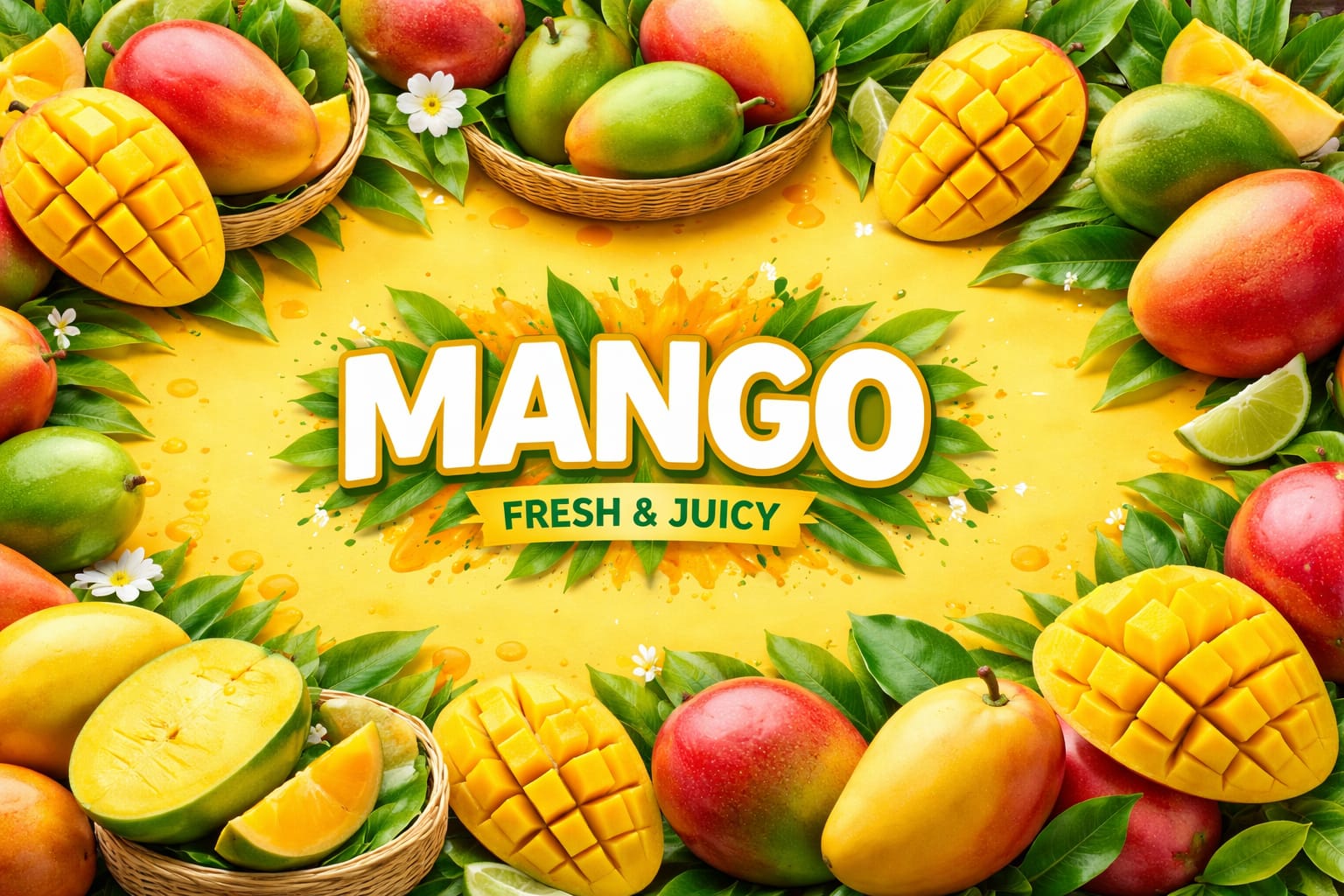
Mango is called as “king of all fruits,” and it’s the national fruit of India, Pakistan, and the Philippines. Mangoes need about four to five months to grow from a flower to a ripe fruit. During this time, the mango changes color several times. First, the baby mango is green. As it grows, some varieties stay green, while others turn yellow, orange, or even red when they’re ready to eat.
People around the world eat mangoes in many different ways. In Thailand, they enjoy mangoes with sticky rice and coconut milk for dessert. In India, they make mango lassi, a sweet yogurt drink that tastes like a milkshake. In Mexico, they cut mangoes into flower shapes and sprinkle them with chili powder and lime juice for a sweet and spicy snack.
Health Benefits:
They are not only delicious but also packed with nutrients that support overall health. Rich in vitamins like vitamin A, vitamin C, and vitamin E, mangoes help strengthen the immune system, improve skin health, and support good vision. Vitamin C, in particular, plays a key role in boosting immunity and helping the body fight infections, which is especially important during seasonal changes.
In addition to vitamins, mangoes contain powerful antioxidants such as beta-carotene and polyphenols. Mangoes are also a good source of essential minerals like potassium and magnesium, which help regulate blood pressure and support proper muscle function.
Preserving Techniques:
The unripe mangoes should be stored in a cool and well ventilated environment at normal temperatures. Mangoes must not be stored in a stack but rather separately on a piece of cloth or paper. It is also important that they should be rotated each day.
Ripe mangoes should be kept in the refrigerator to slow down spoilage. This helps them stay fresh for about five to seven days. If you place them in the bottom drawer of the fridge, they will stay fresh for a longer time.
Mango Tree & Uses:
Mango Stem Bark
The stem bark of the mango tree is known for its anti-bacterial and anti-inflammatory properties. It is commonly used in the treatment of diarrhea, bleeding disorders, and inflammation.
Mango Leaves
Mango leaves are highly valued for their antidiabetic, antioxidant, and antimicrobial actions. They are often used in managing blood sugar levels and respiratory conditions
Mango Flowers
The flowers of the mango tree are astringent and cooling in nature. Traditionally, they are used in the treatment of diarrhea, dysentery, and issues.
Mango Seed
The seed kernel, often underutilized, has potent anthelmintic and astringent properties. It is useful in treating intestinal worms and chronic diarrhea.
Varieties of Mangoes
The Alphonso mango, often referred to as the “King of Mangoes,” is one of the most popular and cherished mango around the world. Alphonso mangoes are medium to large in size, with bright golden-yellow skin that may develop a slight red blush when fully ripe. The flesh is juicy, smooth, and fiberless, offering a rich, honey-like sweetness with a subtle tang. Its non-fibrous texture and vibrant orange-yellow pulp make it ideal for fresh consumption, juices, milkshakes, desserts, and processed products like ice creams.
These mangoes are easy to identify by their large, elongated shape, vibrant golden-yellow skin, and smooth, non-fibrous, juicy flesh all of which make them a standout among Indian mango varieties. Known for its fleshy texture and excellent taste, the Banganapalli mango combines rich sweetness with a subtle hint of tartness. Its honey-like flavour, balanced with just enough tang, makes it ideal for fresh consumption, juices, smoothies, and desserts.
The Kesar mango is medium-sized with a roundish shape and a slightly curved tip. Its skin is thin, smooth, and light yellow, often retaining a hint of green even when fully ripe. The inner flesh is juicy, sweet, and slightly tangy.